Core Swarm Capability
53+ UX Research Skills
Structured Double Diamond UX evaluation workflows and skill runner execution harnesses.
User & Researcher Perspective
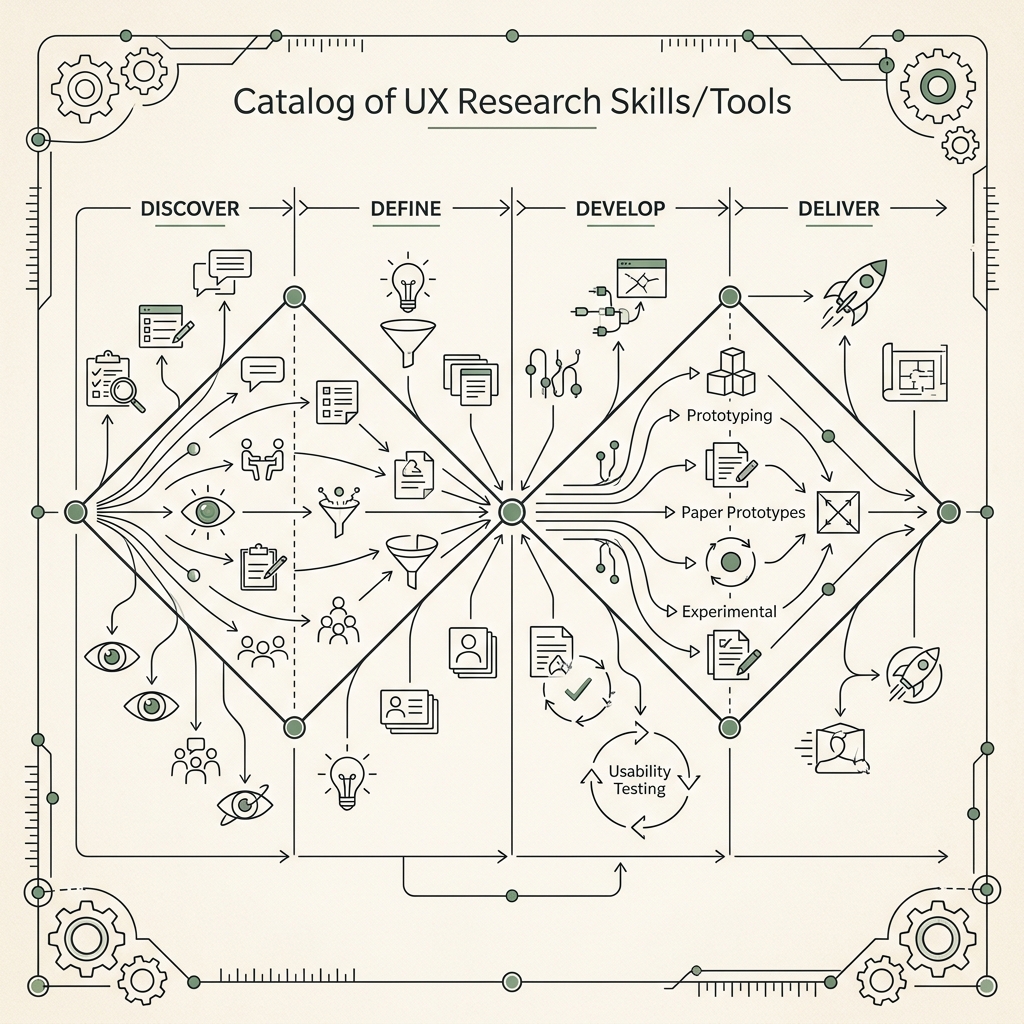
53+ UX Research Skills provides a sandboxed, robust suite of predefined execution workflows structured around the classic Double Diamond product design stages (Discover, Define, Develop, Deliver). Researchers can execute heuristic audits, SUS usability score calculations, card sorting analyses, competitive grids, or thematic transcript tagging through simple commands, receiving structured, audit-ready data tables.
Operational Workflows & Intent
- Double Diamond Guided Research: Skills are classified logically to guide teams through discovering problems, defining opportunities, developing prototypes, and delivering validated specs.
- Heuristic Audits: Researchers trigger automated audits evaluating design screenshots or prototypes against established user experience principles.
Engineering & Architecture Perspective
The Skill registry is located in backend/app/skills/registry.py and managed by backend/app/skills/skill_manager.py. Executed skills run in isolated local subprocesses or sandboxed threads to ensure resource governance.
Granular Technical Data Flow
- Trigger: An agent or researcher dispatches a skill execution command carrying input arguments and target sources.
- Parameters Validation: The Skill Manager loads the skill's JSON schema, sanitizes inputs, and verifies project permissions.
- Isolated Execution: The skill runs within a resource-governed runner, catching memory exhaustion errors and keeping track of API call tokens.
- Result Registration: Output findings, nuggets, or qualitative codes are registered under provisional states within the Research Spine.
Technical Documentation Approach
UX Skills follow the Memento Skill creation and prompt-evolution protocol. All skill specifications are version-controlled and dynamically loaded. When a skill proposes prompt optimizations, the proposal must run through validation benchmarks.
Compliance & Quality Invariants
- Process Sandbox: Skills cannot modify filesystem areas outside of the designated project workspace.
- Self-Evolution Controls: Prompt variations generated via meta-heuristics are locked under 'Provisional' flags until approved by human administrators.
Scientific Foundations & Bibliography
Our UX evaluation engines are built on classic design methodologies and cognitive psychology laws:
- Design Principles Checklist: Yablonski, J. (2020) — Laws of UX: Design Principles for Persuasive and Ethical Products. O'Reilly Media. Informs our automated compliance checks and usability auditing.
Source Code Reference
backend/app/skills/skill_manager.pybackend/app/skills/registry.py