Technical Architecture
Multi-Model Ensemble Health
Zero-bias independent atomic coding, consensus validation, and Fleiss' Kappa scoring engines.
User & Researcher Perspective
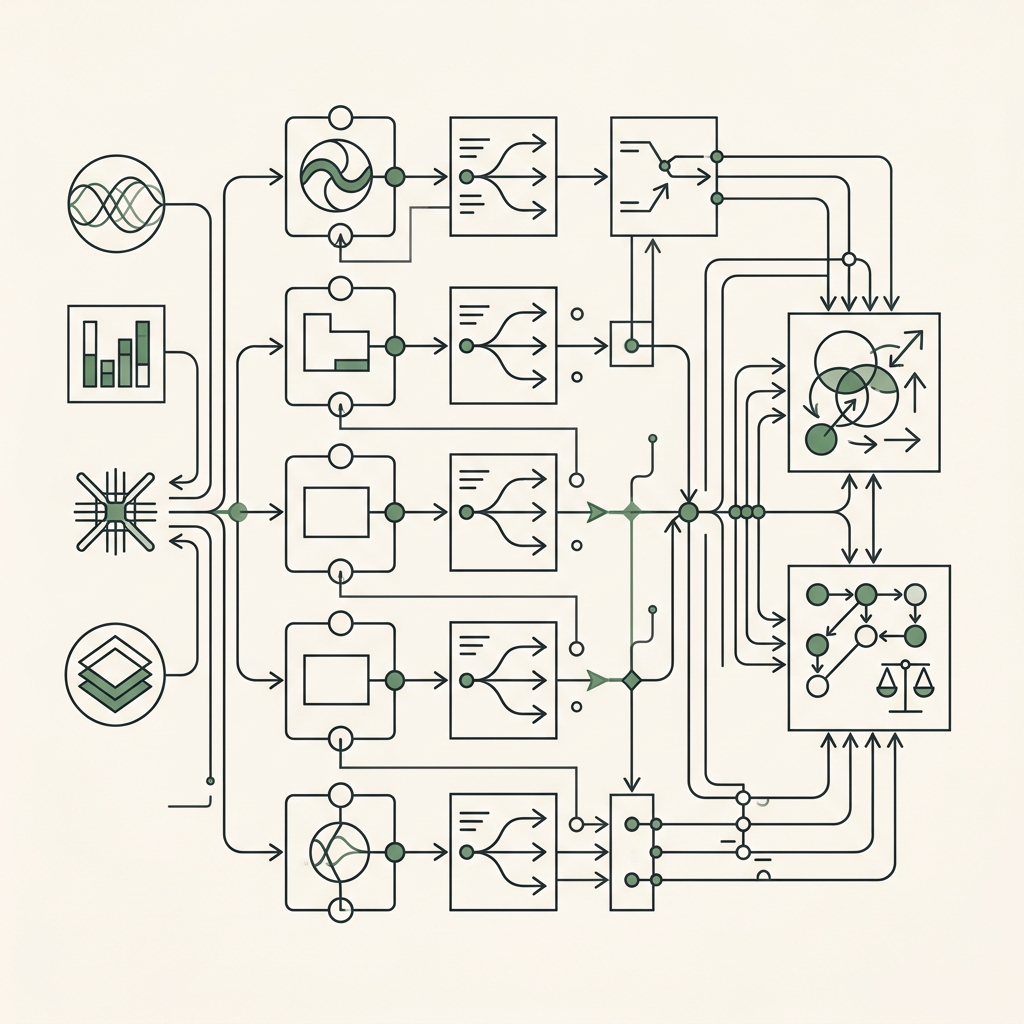
Multi-Model Ensemble Health mitigates model bias in qualitative coding. Instead of relying on a single AI's interpretation, Istara executes parallel, independent code extractions across multiple models (e.g. Cleo, Sentinel, Pixel) and computes real-time inter-coder agreement. This ensures that only high-agreement, verified qualitative codes are accepted into your research findings.
Operational Workflows & Intent
- Consensus Auditing: Researchers review inter-coder agreement metrics (Fleiss' Kappa and Cohen's Kappa) to identify ambiguous codes.
- Adjudication: Divergent extractions are routed to a human reconciliation panel, converting model disagreements into high-value qualitative insights.
Engineering & Architecture Perspective
Agreement calculations and independent extractions are performed in backend/app/skills/intercoder.py and validated in the research validity pipeline in backend/app/services/research_validity_service.py.
Granular Technical Data Flow
- Parallel Extraction: A raw text span is dispatched to N independent local model tasks.
- Matrix Generation: A nominal rater-by-item coding matrix is constructed, mapping model identities to assigned code classifications.
- Statistical Evaluation: The intercoder scoring engine computes Fleiss' Kappa for multi-coder agreement or Cohen's Kappa for dual-coder comparisons.
- Reconciliation Routing: If the agreement score meets the configured threshold, the code is promoted to 'Provisional Nugget'. Otherwise, it is routed to the human Kanban board for review.
Technical Documentation Approach
Model coding consensus is a core gate of the Research Spine. The system strictly forbids using simple majority voting without computing inter-coder agreement statistics first.
Compliance & Quality Invariants
- Independent Coding: Models are strictly blocked from seeing peer model predictions during the initial coding phase.
- Kappa Enforcement: Coding runs with a Kappa score below 0.65 are locked and cannot be compiled into reports until resolved by a human researcher.
Scientific Foundations & Bibliography
The statistical validity of our qualitative consensus coding is backed by classic inter-rater agreement standards:
- Inter-Rater Reliability (Fleiss' Kappa): Fleiss, J. L. (1971) — "Measuring Nominal Scale Agreement among Many Raters" Psychological Bulletin 76(5):378-382.
- Dual-Coder Agreement (Cohen's Kappa): Cohen, J. (1960) — "A Coefficient of Agreement for Nominal Scales" Educational and Psychological Measurement 20(1):37-46.
- Qualitative Methodology: O'Connor & Joffe (2020) — "Intercoder Reliability in Qualitative Research: Debates and Practical Guidelines" International Journal of Qualitative Methods.
- Codebook Discipline: MacQueen et al. (1998) — "Codebook Development for Team-Based Qualitative Analysis" Cultural Anthropology Methods 10(2):31-36.
- Mixture-of-Agents Architectures: Wang et al. (2024) — "Mixture-of-Agents Enhances Large Language Model Capabilities" arXiv:2406.04692 and Li et al. (2025) — "Rethinking Mixture-of-Agents: Is Mixing Different Large Language Models Beneficial?" arXiv:2502.00674.
Source Code Reference
backend/app/skills/intercoder.pybackend/app/services/research_validity_service.py